
A baptism in modern art
I recently went to the Tate Modern, my first immersion in modern art. It was an overwhelming experience. Not in a bad way, but in a different way to the awe-inspiring divinity of a room full of Van Goghs or Canalettos. I was taken aback by the power of modern art and its many messages.
Art and (human) waste
Standing rather solemnly in the museum is Marcel Duchamp’s fountain. Duchamp’s awkward object of defecation carries one of modern art’s strongest teachings.
A subversion to convention.
Duchamp’s Fountain is a ‘readymade’ sculpture, opposing the view that art must be manually crafted for aesthetic beauty. Duchamp views the urinal as having meaning itself, the basis of art. The fountain is a piece of conceptual art, bearing a concept that is more important than its visual representation. This message of defiance illuminates modern art’s basis as a break from the past.
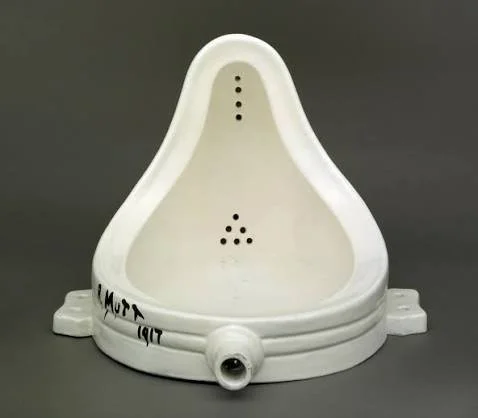
Marcel Duchamp, Fountain, 1917
Interactivity
I found the interactivity of modern art astounding. This is embraced by Nora Chipaumire’s commission. A room designed to be an homage to the nature of Zimbabwe, her work was a prime example of ‘show not tell.’ Instead of just painting Zimbabwe, Chipaumire placed you within it. Life-size sculptures of boulders, the sounds of insects, and the soft desert like floor provided a three dimensional experience. These sensory provisions went beyond the visual nature of classical artwork, nourishing all the inputs of human understanding.
Art and politics
Much of modern art also has a political message. This attachment is due to society’s political conscience also being modern. Like modern art, this was born in the 20th century with the advent of true democracy and universal suffrage in the West. Cildo Meireles adopts this in his sculpture babel 2001. This towering sculpture of stacked radios reflects the over-information revolution of today - ironic as it has become the most ‘instagrammable’ exhibit of the museum. Another room was dedicated to the Guérilla Girls, an anonymous feminist art group that focused on highlighting gender inequality within museums. The movement functioned through public posters, exhibits, and essays, moving the awareness of inequality in art beyond the museum setting.
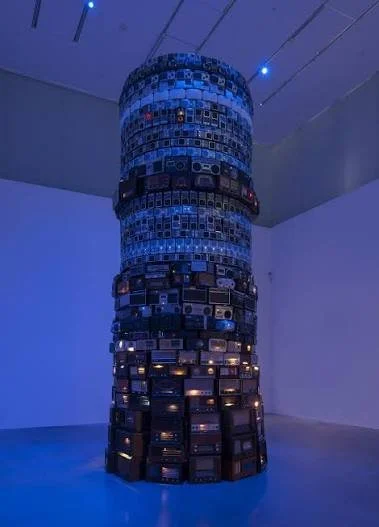
Cildo Mereiles- Babel 2001
Surrealism
What does the surreal mean to you? To me, it is something of impossible greatness, beyond a conscious interpretation of the world. This is the foundation of surrealism, a 20th century art movement that encourages one to interact with the unconscious and to embrace the unorthodox, illogical and seemingly impossible. The most famous surrealists include Salvador Dali and Rene Magritte. Dali’s work provides an endless voyage of exploration in a world that transcends human and natural convention. Magritte’s work similarly confuses one, described as a ‘systematic attempt to disrupt any dogmatic view of the physical world.’ The Tate’s inclusion of many surrealist paintings reflects the synonymy between art and psychology. This was pertinent at modern art’s ascent in the early twentieth century with the popularity of figures such as Sigmund Freud and Carl Jung.
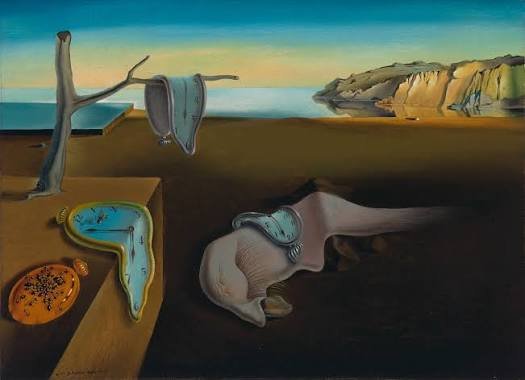
Salvador Dali- The Persistence of Memory 1931
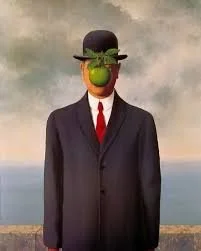
Rene Magritte- The Son of Man 1964
Arte povera and land art
‘Arte povera’ was name-dropped throughout the museum. Meaning ‘poor art’, this late twenty-first century movement is not about poverty, rather the use of everyday materials to create art. Richard Long, a British sculptor, was a prominent member of the movement. Long rejects the commercial and permanent nature of artwork, instead basing his work around long walks. During these walks, he made sculptures from natural materials and photographed them. Long’s most famous piece was his sculpture ‘A Line Made by Walking’. The work was simply a picture of the act described in the title. Long challenges one to consider whether the finished product or the process of the art is the actual work, and rejects the conventional norms of sculpture. His work was also at the forefront of the land art movement. I had known about this before visiting the Tate, exclusive to the fantastic work of Walter De Maria. De Maria’s Lightning Field is perhaps land art’s most iconic piece. De Maria arranged 400 stainless steel poles in a rectangular 1 mile by 1 kilometre pattern in a field in New Mexico. These would then conduct lightning, photographed to create striking pictures of the natural world’s artistic beauty.
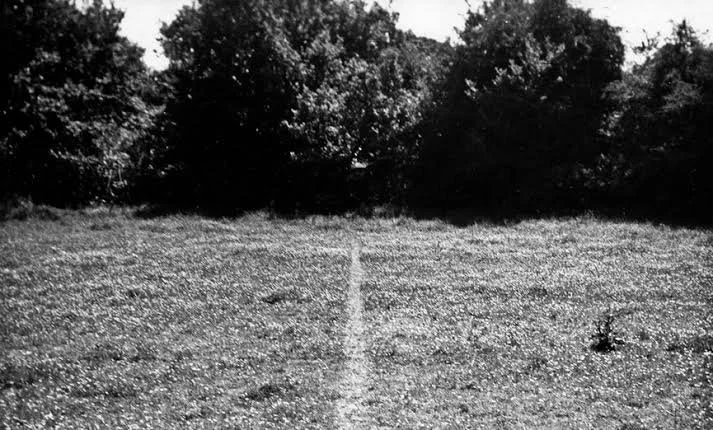
Richard Long- A Line Made by Walking 1967
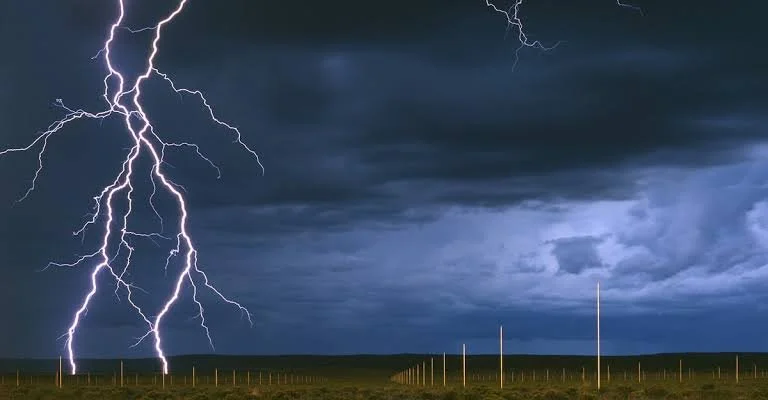
Walter de Maria- Lighting Field 1977
I saw so much art that day to possibly comment on it all. Above are solely 5 teachings from my first immersion in modern art, provided by the baptismal font of Tate Modern.